
The small problems you notice with your diesel engine today might signal bigger troubles ahead. A little extra shake or your engine taking longer than usual to start should not be ignored. These warning signs often lead to serious problems, from failing fuel systems to blocked diesel particulate filters.
You need to catch these common diesel engine problems early to avoid costly repairs. This applies to all diesel-powered equipment, including mining machines, farm equipment, trucks and 4×4s. Understanding what to watch for can help you take action before a minor issue becomes a major repair.
Common Diesel Engine Issues
Diesel engines are known for their reliability, but they aren’t immune to wear and tear. Over time, components such as injectors, filters, turbochargers and emission control systems can begin to fail.
- Some of the most common diesel engine problems include:
- Excessive vibration during operation
- Difficult cold starts
- Fuel injector failures
- DPF (Diesel Particulate Filter) clogging
- Loss of engine power
- Increased oil consumption
Be sure to watch your oil consumption carefully. Engine age, heavy use, and worn valve guides can all cause increased oil use. Head gasket failure ranks among the most serious problems to watch. Heat cycles and pressure in cylinders can break down the gasket over time. This leads to oil and coolant mixing.
Modern diesel engines also contain complex emissions systems such as EGR valves and DPF filters, which are designed to reduce emissions but can become common trouble spots if they are not properly maintained.

What the Colour of Your Exhaust Smoke Could Mean
One of the easiest ways to identify diesel engine problems is by looking at the colour of the exhaust smoke. Different smoke colours often indicate specific mechanical issues.
Black Smoke
Black smoke usually means your air-to-fuel ratio is off. This can happen with:
- Faulty fuel injectors
- Clogged air filters
- Malfunctioning turbochargers
- Poor air-fuel ratio
Blue Smoke
Blue smoke occurs when the engine is burning oil. This typically happens when oil enters the combustion chamber and may be caused by:
- Worn valve guides
- Damaged piston rings
- Internal engine wear
If blue smoke appears consistently, it may be a sign of more serious engine problems that require professional inspection.
Diesel Engine Warning Signs
Beyond smoke colour, diesel engines often show other warning signs when something is wrong.
Engine Knocking: Engine knocking often points to compression problems or fuel injector faults, which can be caused by compression problems or fuel injection issues.
Hard Starting: If your engine struggles to start, particularly in colder weather, bad glow plugs or fuel delivery problems could be the culprit.
Loss of Power: Sudden or gradual power loss is another common sign of diesel engine trouble. This can be due to plugged fuel or air filters, fuel contamination, or a failing turbocharger. Loss of power is especially noticeable when you’re operating under heavy loads or when towing.
Rough Idle: Engines that idle roughly or run unevenly might be having problems with faulty fuel injectors or fuel pumps, and they often worsen if they’re not addressed quickly.
Modern Diesel Engine Problems
Modern diesel engines are more efficient and cleaner than older designs, but they also include additional components that can become trouble spots causing new issues.
DPF Blockage
The DPF captures soot from exhaust gases to reduce emissions. Over time, the filter can become clogged, especially if your vehicle mainly performs short trips.
If you notice reduced performance, an increase in fuel consumption, or warning lights on your dashboard, you could be looking at DPF issues. Regular highway driving or forced regeneration may be needed to clear the filter.
EGR Valve Issues
The EGR valve recirculates exhaust gases to reduce emissions. However, soot buildup can cause the valve to stick or malfunction, resulting in black smoke and reduced engine efficiency. Keep up with routine maintenance to prevent buildup in these systems.
Early Warning Signs You Shouldn’t Ignore
Strange noises from your engine are often a warning about developing problems.
Knocking Sounds
A knocking sound usually points to oil contamination or timing issues that are caused by worn bearings or piston damage.
Unusual Vibrations
Excessive vibration can point to problems like injector imbalance or engine timing problems.
Changes in Performance
Your engine can also tell you that something is wrong through changes in its performance. If the engine suddenly loses power, especially when you have heavy loads, this is a clear sign of cylinder compression problems or failing turbochargers.
The rough idling you experience might point to faulty injectors or fuel pump problems that need quick attention.
Additional Warning Signs
Other signs you should also watch out for include:
Needing to add oil more often than usual can signal worn piston rings or cylinder liner problems.
The engine keeps running after you switch it off, known as “diesel runaway”.
Simple Checks That Save Money
To avoid pricey repairs in the future, your diesel engine needs regular maintenance checks.
Fuel Filters
The first step will be to replace your fuel filters every 15,000 to 30,000km. Modern diesel engines come with two fuel filters that need simultaneous changes to work their best.
Coolant
Coolant negligence causes more than 40% of diesel engine maintenance problems. Your engine needs coolant level checks every two weeks. A coolant change every two years will help stop acid buildup, which can severely damage your radiator.
Recommended Maintenance Schedules
Here are key maintenance schedules you should follow to avoid expensive repairs:
Oil changes every 5,000km with standard oil or 8,000km with synthetic oil
Air filter replacement every 10,000 to 15,000km
Fuel filter inspection every 16,000 to 24,000 km
Using quality fuel will protect your injectors from damage, which can be costly—replacements can run up to $300 per injector. For added protection against contaminants, consider installing a secondary 2-micron fuel filter to extend injector life and maintain engine performance.
Your turbocharger will last longer when you let the engine idle for a few minutes before shutdown. This simple step and regular water separator draining keep your engine running smoothly.
When to Call a Diesel Mechanic
If you notice ongoing engine problems such as power loss, unusual noises, smoke or starting issues, it’s important to have the engine inspected by a professional diesel mechanic.
Early diagnosis can prevent serious damage and reduce repair costs.
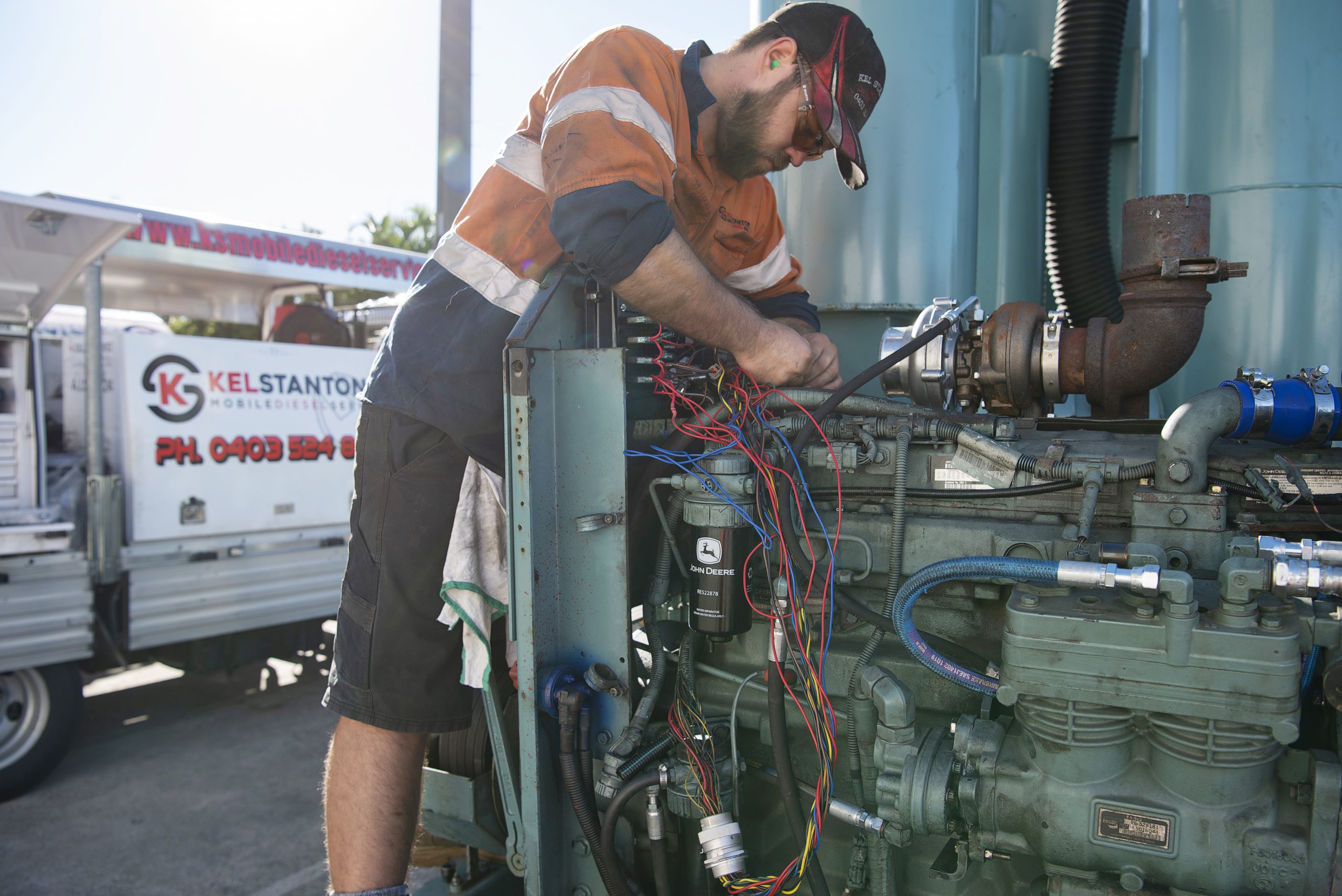
Mobile diesel servicing is particularly valuable for heavy equipment, trucks, and machinery where transporting the vehicle to a workshop may be difficult.
Keep Your Trucks and Machinery in Perfect Condition with KS Mobile Diesel!
Your diesel engine serves as a reliable workhorse. However, repair costs can skyrocket when the warning signs go unnoticed.
To ensure your machine is firing on all cylinders, you need the support of a dedicated maintenance provider.
KS Mobile Diesel is a Mobile Diesel Service that provides full maintenance for clients across South East Queensland. Our fully equipped mobile service trucks can come to you wherever you are and provide servicing, maintenance and repairs.
Get in touch with us if you’d like to find out more or want to discuss your engine’s maintenance needs or diesel truck servicing.